Hotels for Refugees: Colonialism, Migration, and Tourism in Lisbon

Christoph Kalter, University of California, Berkeley

Lisbon is a peculiar metropolis. The city is the capital of a nation that one of its leading intellectuals, the sociologist Boaventura de Sousa Santos, has qualified as semi-peripheral. On the one hand, Lisbon represents a small country that has been economically weak, culturally marginal, and politically dependent on more powerful allies throughout much of its modern history. On the other hand, the city has experienced periods of flourishing commercial activity, impressive wealth, and far-reaching cultural radiance, and it has for centuries been closely connected to the rest of the European continent and the wider world through a continuous flow of people and goods. Three dimensions of this connectedness can be easily identified: first, Portugal’s maritime expansion and colonial empire that have shaped the cityscape, architecture, demography, and cultural life of Lisbon; second, movements of emigration, return migration, and immigration that have been a dominant feature of Portuguese history since the fifteenth century; and, finally, throughout the last five decades, the steadily growing influx of tourists who appreciate the painfully beautiful capital for its light, its history and architecture, its thriving cultural life, and, last but not least, for its price level, which is below the price level of many other European cities.
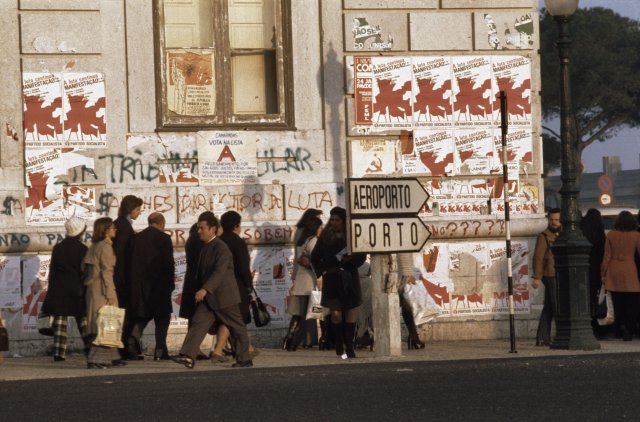
Lisbon 1975 2

Street scene, Lisbon 1975. Photo: Mieremet, Rob / Anefo, National Archives of the Netherlands / Anefo, licence CC-BY

Continue reading

Posted in Article | Tagged , , , , , | 1 Comment

Rangoon and Singapore: Connections, Comparisons, and the Construction of Southeast Asian Cities

Michael Sugarman, University of Cambridge

November’s parliamentary elections in Myanmar have contributed to a sense of cautious optimism not only on the ground, but also amongst academics studying the Southeast Asian nation’s rich and complex history and society. While academic research in the country was heavily restricted for decades under the country’s ruling military junta, a recent loosening of immigration laws and state control has sparked renewed interest in Burma studies. In this light, studying Myanmar’s largest city, Yangon (also known as Rangoon), has become not only possible, but also increasingly productive for historians connecting the city to both South and Southeast Asia like Sunil Amrith, Nile Green, Su Lin Lewis and Jonathan Saha.

Fytche_Square_Rangoon

Fytche Square, Rangoon during the 1890s.

Continue reading

Posted in Article | Tagged , , , , , , | Leave a comment

The Palais After Dark: Two Histories of British Dance Halls

James Nott, Going to the Palais: A Social and Cultural History of Dancing and Dance Halls in Britain, 1918–1960, Oxford: Oxford University Press 2015, 327 pp, £65.00, ISBN 978-0199605194.

Dave Haslam, Life After Dark: A History of British Nightclubs & Music Venues, London: Simon  & Schuster 2015, 448 pp, £20.00, ISBN 978-0857206985.

Reviewed by Tobias Becker, German Historical Institute London

The two books under review are both about dance culture and dance venues in Britain—and could hardly be more different. James Nott’s Going to the Palais, an academic study based on years of research and a wealth of sources, politely asks his readers for the next dance before gently putting them through the paces and accompanying them back to their seats. By contrast, Dave Haslam’s Life After Dark, a music-fuelled road trip through the history of British clubland that jump-cuts from one anecdote to the next, grabs its readers by their hands and drags them round the dance floor. Both books are about urban culture insofar as dance halls are located in cities. However, neither Nott nor Haslam fully explores the relationship between dance and the city, the venues under investigation and the surrounding urban space.

Continue reading

Posted in Reviews | Tagged , , , , , , , , | Leave a comment

What’s in a Grid? Finding the Form of Settler Colonialism in Melbourne

Nadia Rhook, La Trobe University

jack charles

Actor and Coranderrk descendant Uncle Jack Charles playing William Barak in Coranderrk: we will show the country (Photo by Patrick Boland)

In recent years Melburnians have been educated about an episode of Australian history previously little known in non-Indigenous circles. A play, Coranderrk: we will show the country, has been performed in theatres around Melbourne, and this month will show on the former site of Coranderrk Aboriginal mission, 70 kilometers northeast of central Melbourne. It’s a poignant re-enactment of an 1881 Victorian Parliamentary hearing, where Aboriginal residents protested the proposed change of mission manager. Predicting that the new manager would thwart the success of their hop farm, and hence hinder their land rights movement, the Wurundjeri leader, William Barak, spoke forcefully against the proposed change of management. Continue reading

Posted in Article | Tagged , , , , , , , , , | 1 Comment

The “Spiritual Capital” of the Rust Belt: Pittsburgh and the Postindustrial Transformation of North Atlantic Cities

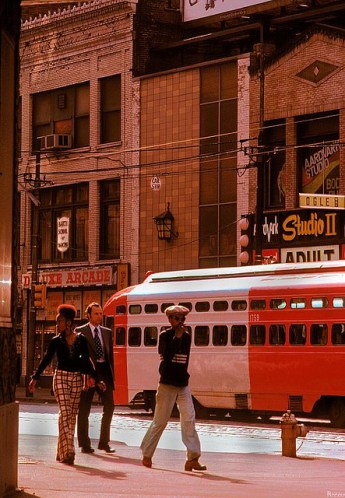
Pittsburgh in 1970s

Pittsburgh Street Scene, 1970s

Tracy Neumann, Harvard University / Wayne State University

In 1973, Daniel Bell’s The Coming of Post-Industrial Society hit bookshelves just as the golden age of postwar capitalism wound to an end. In it, Bell described post-industrial society as one in which the basis of the economy had shifted from the production of goods to the provision of services. He argued that knowledge industries had replaced manual labor as the most important social force in advanced capitalist nations, and that a technical-professional class had supplanted the working class. For Bell, this marked progress toward a more just future characterized by shorter workdays, more leisure time, and a more equitable distribution of resources. Journalists, pundits, and politicians eagerly embraced Bell’s thesis, and “post-industrial society” rapidly became part of the popular and professional lexicon.

When Bell predicted that manufacturing would decline and that professional services and technology industries would become increasingly important to industrialized economies, he was not telling planners and politicians in Detroit, Manchester, and the Ruhr Valley anything they did not already know. In those places, economic trends away from manufacturing and toward increased service sector employment had been clear for a decade or more.

Continue reading

Posted in Article | Tagged , , , , , , , , | 1 Comment

Berlin, 1873: A New Imperial Center and a Transatlantic Financial Crisis

Catherine Davies, FernUniversität in Hagen

When thinking about the interrelationship between the urban and the global, stock exchanges may yield valuable insights. A quintessentially urban locale, they were often seen as institutions that brought global events home with much force and immediacy. Describing British society during the Napoleonic Wars, the narrator in William Thackeray’s Vanity Fair (1847/48) observes that the City of London, work place of stock broker William Sedley, was a ‘stirring place in those days, when war was raging all over Europe, and empires were being staked … Old Sedley once or twice came home with a very grave face; and no wonder, when such news as this was agitating all the hearts and all the stocks of Europe.’

The World's Exchanges

Print “The World’s Exchanges” from 1886 displaying the stock exchanges in New York, Paris, Chicago, London, Hamburg, Frankfurt, Berlin, and Brussels (from top left to bottom right)

Continue reading

Posted in Article | Tagged , , , , , , , , | 2 Comments

Imperial Cities as Cultural Nodes: A View from Early Twentieth-Century Tokyo

Jordan Sand, Georgetown University

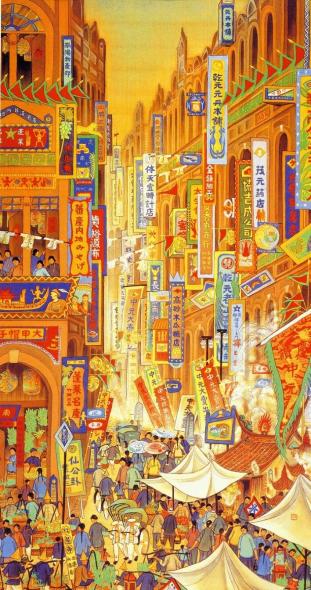
Kuo Hsueh-hu Festival on South St

Guo Xuehu. Festival on South Street (Taipei), 1930. Taipei Fine Arts Museum [1]

I recently published a collection of essays exploring the culture of the Japanese empire. It proved impossible to talk about this subject without talking about other empires, which provided the institutional models and many of the material forms for Japan’s imperial modernity. And the case of imperial Japan, which brought Western modernity to other countries in Asia and the Pacific while at the same time seeking to modernize itself based on Western models, suggested the fruitfulness of considering modern imperialism not simply in terms of a metropolitan core and colonial periphery, but as a set of networked sites of asymmetrical encounter. In this framework, imperial cities take on special importance, as places of rapid cultural change and of cultural interchange. Since the fundamental structures of colonial empires were explicitly hierarchical, culture tended to move through these networks unidirectionally, but the hierarchies were neither uniform nor confined to single empires, cultural meanings transformed in the process of transmission, and the core in a particular cultural network was not always its imperial center in political terms.

Continue reading

Posted in Article | Tagged , , , , , , , , , , , | 2 Comments

Fashioning the Colonial Metropolis: Asian Influences and Urban Identities in Colonial Mexico City

Nino Vallen, Freie Universität Berlin

At the end of the seventeenth century, the Mexican artist Cristóbal de Villalpando painted the main square of Mexico City. His image of the zócalo depicts approximately 1,200 persons strolling around or standing in groups outside the metropolitan cathedral or the partially ruined viceregal palace. At the center of all this activity, Villalpando located the two markets that fill most of this public space. Gondola-like boats and carts can be seen transporting merchandise to the market in the upper part of the image, while carriages and members of the city’s merchant elite flock together in the surroundings of a recently constructed market, the Parián, that appears at the forefront of the composition.

Fig. 1 - Cristobal de Villalpando - View of the Zócalo of Mexico City (1695)

Cristóbal de Villalpando’s Pinting of Mexico City’s Main Square, Late 17th Century

Continue reading

Posted in Article | Tagged , , , , , , , , , , , , | 5 Comments

Rush Hour in Ottoman Istanbul: Mechanized Transportation and the Emergence of Modern Temporal Patterns

Avner Wishnitzer, Tel Aviv University

It is the morning rush hour in the Istanbul neighborhood of Eminönü. Another ferry is approaching the quay and even before it is tied to the platform, hordes of people alight and rush on to the street. Some stop for a few seconds to buy a simit and then eat it as they run to catch the tram. It is only with difficulty that they manage to make their way through the crowd of peddlers and tourists. Taking quick bites from their simits without lowering their eyes, they try to avoid head-on collision with their likes who happen to be running in the opposite direction, praying that the ferry has not departed yet.

Such images are so natural to us today that we rarely ask when and how they became an integral part of life in Istanbul. While much has been written about the remaking of Ottoman urban space during the nineteenth century, very little has been said about parallel changes in urban time. Yet, it is impossible to comprehend modern urban experience without a sense of its unique rhythms. Exploring the development of these rhythms in nineteenth century Istanbul shows that it was the subjugation of people to a widening web of interlocking time systems, within the unique physical layout of Istanbul that gradually gave the city its peculiar pulse, a pulse that is still recognizable today.

Galata Bridge

Galata Bridge in Istanbul in the late nineteenth century with a clock in the lower right corner

Continue reading

Posted in Article | Tagged , , , , , , , , , | 1 Comment

Detroit: Capital of the Automotive Age

Stefan Link, Dartmouth College

In 1913, Detroit’s Ford Motor Company made history when it introduced moving assembly lines into car manufacturing. In 2013, the city of Detroit declared bankruptcy. A century ago, Detroit was a fast-growing metropolis, attracting immigrants from Europe and America’s rural South

mdp.39015071538683

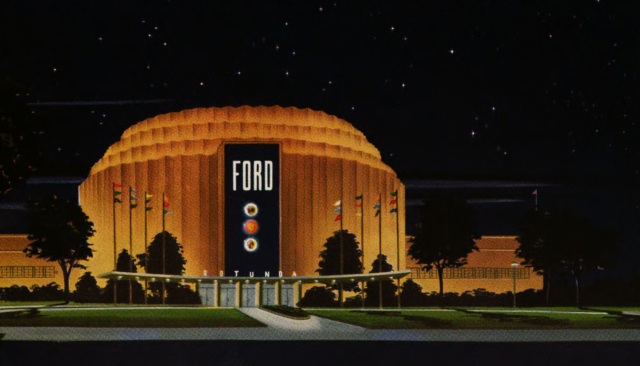
Albert Kahn’s Ford Rotunda, built for the Chicago 1934 World’s Fair

into its burgeoning automobile factories. Today, Detroit is still reeling from the disaster of 2007-12 – a crisis that locals nicknamed the “third” Great Depression (after 1929-33 and 1979-82). Detroit has lost 1.4 million inhabitants since its peak population in the 1950s, leaving behind a poverty-stricken African-American city (more than 80% of Detroiters are black). Renewal efforts today are divided: while deep-pocketed investors shine up the attractive 1920s skyscraper landscape downtown, attracting a new – mostly young and white – creative class, thousands of residential houses in the surrounding black neighborhoods are earmarked for demolition. Continue reading

Posted in Article | Tagged , , , , , , , , | Leave a comment