
This article relates to a new special issue published in Urban History titled ‘Bridgeheads and Breakwaters: The Socio-Environmental History of Port Cities after the Global Turn’. The issue was edited by Michael Goebel, Christian Jones, Yorim Spoelder, and Xinge Zhai. The articles are available online through FirstView https://www.cambridge.org/core/journals/urban-history/firstview and are linked individually below.
By Christian Jones, Free University of Berlin
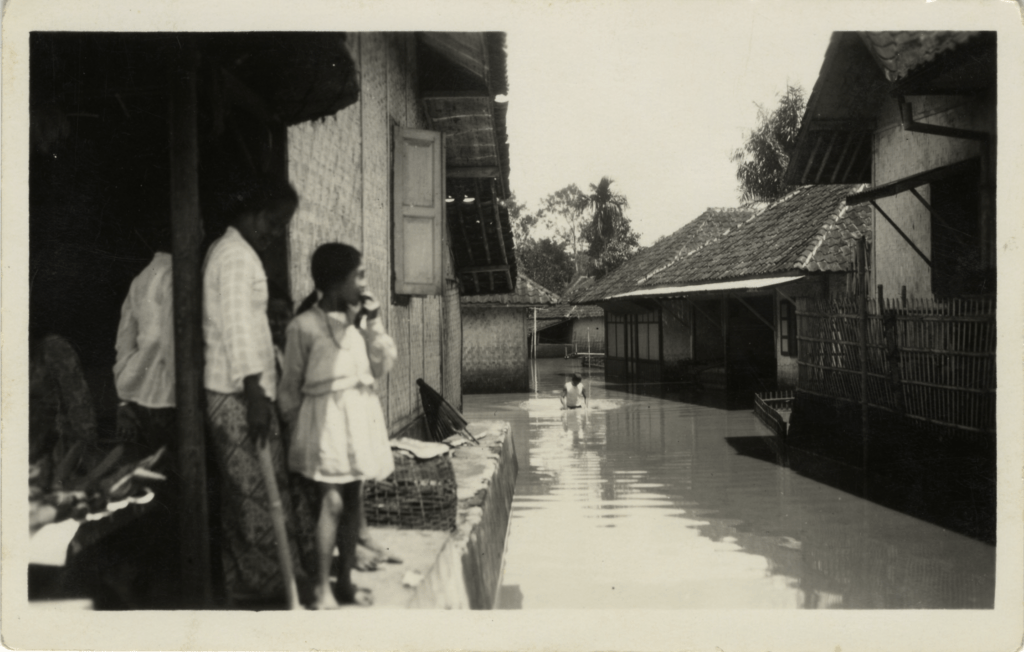
How can global history and urban history be brought together? In many respects, this has been the central predicament for the Global Urban History Project (GUHP) since its inception. While global history has long been concerned with globe-spanning circulations and networks, urban history has traditionally entailed localized studies of specific spaces and places. Over the years, GUHP has helped bring together scholars working at the intersection of these approaches, but fundamental questions still remain over the meaning and methodologies of global urban history.
The Special Issue ‘Bridgeheads and Breakwaters: The Socio-Environmental History of Port Cities after the Global Turn’ offers one way of approaching this dilemma by emphasizing the ‘socio-environmental’ make-up of cities and their transformations in a period of rapid globalization. Published in 2025 in Urban History, it is the result of two workshops and several years of conversations between the editors and the issue’s contributors about this tension at the heart of global urban history. As stated in the introductory essay, we argue that ‘port cities were not merely portals of globalization, but incubators of change in their own right. Their growth trajectories… can only be meaningfully explained with reference to the constant dynamic interplay between local environmental and social factors on the one hand, and wider entanglements on the other’. This line of argument was not predetermined but rather was the result of these discussions between a diverse group of authors working on different world regions across different periods of time.
The table of contents is as follows:
Michael Yeo, Before the port city: coastal settlements and colonialism in Borneo
Lucia Carminati, Faecal matters: an excremental archive of early Port Said
Adrián Lerner Patrón, A riverine society: Iquitos and the precarious urbanization of Amazonia
Ademide Adelusi-Adeluyi, Troubled waters: rewriting environmental histories of Lagos, 1882–1921
Case Studies in Comparison
Together, these articles represent a ‘socio-environmental’ approach to global urban history. While we acknowledge this may not be the most attractive term, it appropriately reflects the hybrid approach we encouraged our authors to adopt. Each article demonstrates how port cities were shaped not only by global flows of trade and people, but also by the socio-environmental conditions in which they were embedded, and in turn, how these affected those same global flows. The hyphen is intended to suggest the interplay of social and environmental factors as shared and not separate factors in urban development. The structure of the special issue was designed so that the reader moves from environmentally focused articles to articles with a stronger emphasis on social history, however, all emphasize the fusion of these two approaches into one methodology. Through this lens, the special issue shows that urban histories can be written in a way that is both locally attuned and globally informed.
The range of topics in this special issue signals the growing interest in its themes and many of the authors have been closely associated with the Global Urban History Project since its formation. We were especially encouraged to see how many scholars early in their careers saw these themes as important and have made them cornerstones of their own research. We believe that the special issue reflects a snapshot of ongoing research at the forefront of global urban history and seeks to steer this research in new directions.

The Making Of
When we organized a conference in Berlin in summer 2022 with the support of the Swiss National Science Foundation, our initial thinking was that recent works in the global history of cities had tended to lose sight of the city itself in highlighting its role in facilitating globalization. Our intention was to bring together scholars who could bring out the intersection of the social, the urban, and the global to find a balance between these different spatial scales. The key question that we proposed in the abstract was: How can we write histories that strike a balance between the peculiarities and rootedness of place, and the fluid realities of flows and mobility? Our specific focus was on port cities which have received an inordinate amount of attention given their importance to global history. In our thematic panels, we hoped to challenge many of the assumptions and categories that underpinned these studies (like the concept of a ‘port city’ itself) and rethink, from the Global South, what global urban history should look like going forward.
This conference, ‘Writing the Social History of Port Cities: Comparative Approaches to Urban History in the Global South’, was illuminating precisely because it broke with many of our prior expectations as organizers. For one, we were surprised at the emphasis on the natural environment in both the papers presented and the discussions. Water in particular figured very strongly, drawing a direct contrast with the metaphors of ‘fluidity’ used in global histories. Not only was this a valuable reminder of the utility of conferences in generating new ideas and new lines of thinking, but it also led us editors to wonder about the overlaps between social and environmental history, and how this may prove a productive path towards tackling our key question. Additionally, by only loosely limiting our area to the ‘Global South’, we came to see many interesting cross-regional comparisons that are typically overlooked and became more convinced of the need to challenge the exceptionalism reinforced by Area Studies.
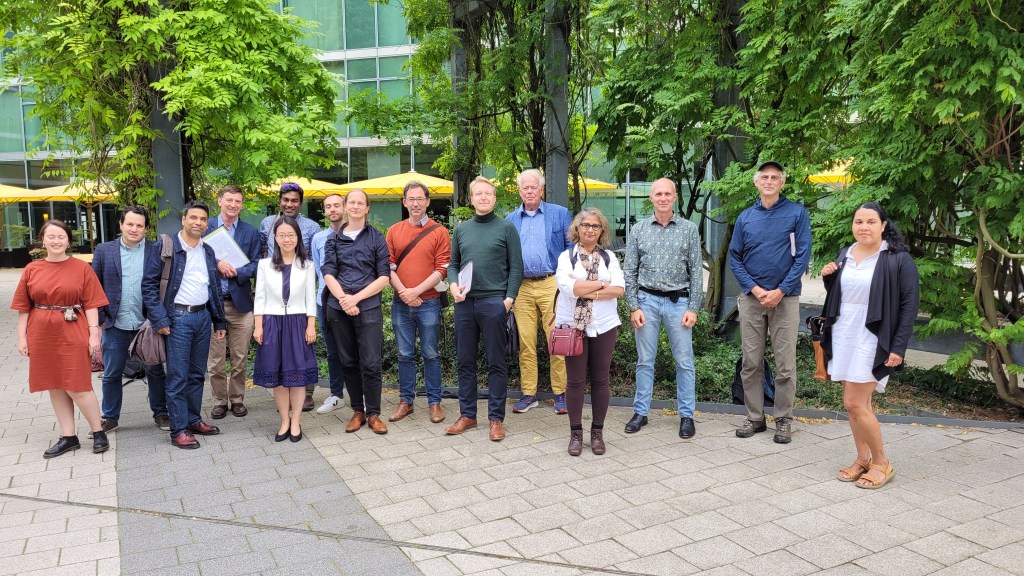
With many excellent papers being presented, we naturally hoped to take our conversations further and produce a publication that presented these findings through detailed case studies and thematic introductory and conclusion essays. Having read many other edited volumes and special issues, we wanted to avoid the problem that befalls many such works by really getting our contributions to speak to one another around a common theme. This led us to call for another workshop, this time only featuring contributors to the special issue, in which we discussed pre-circulated drafts of the papers.
We also had the idea of inviting a kind of expert external examiner who could provide further comments from the perspective of one not involved in the writing of the special issue. Professor Alexia Yates who adopted this role proved a wonderful addition to the workshop, turning what could have been fairly routine discussions about paper writing into seminar-style discussions on the broader themes, helping to expose weak points in the architecture and argumentation of the special issue as a whole.

With these two workshops done, it was up to the contributors to revise their drafts and engage in a series of exchanges with the editors over how to change and improve them. We were particularly keen on reminding authors to refer not only to the general themes of the special issue but also to one another’s papers at points of intersection. Doing this all remotely was no simple task, but the fact that we had two workshops together behind us gave the whole writing process a very solid foundation to build on—a recommendation for any budding special issue editors.
It has been a long, winding, and highly rewarding process to work together with so many brilliant historians, all of whom came together to produce a shared vision of what this Special Issue could be. We are especially gratified that the authors were so eager to produce this collectively instead of having their articles remain individual siloed pieces as is so often the case. Rather than closing a debate, we see this special issue as a catalyst for further research into the intersections of the social, the environmental, and the global in urban history, keeping the field fresh eight years after the Global Urban History Project’s foundation, and ten years after this Blog was started.
 Global Urban History